Simple ideas for choosing the right wall, height, scale and lighting for your art.
A painting can transform a room. It can add colour, depth, warmth and personality—but the way it is displayed can make just as much difference as the painting itself. Whether you are choosing an abstract painting for living room, a quiet piece for your bedroom or a striking work for your dining area, thoughtful placement allows the artwork to become a natural part of your home.
Here are a few simple principles to help you display paintings beautifully.
1. Choose the Right Wall
Look for a wall where the painting can be seen and appreciated without competing with too many other elements. A painting above a sofa, console, bed or dining area can create a strong focal point. In some rooms, however, a quieter wall may be the better choice—especially if you want the artwork to have a more contemplative presence.
Before hanging a painting, take a moment to stand back and imagine how it will relate to the furniture, light and surrounding space.
2. Hang the Painting at the Right Height
One of the most common mistakes is hanging paintings too high. As a general guideline, the centre of a painting should be close to eye level. In many homes, this means approximately 57–60 inches from the floor to the centre of the artwork.
When a painting is displayed above furniture, it should feel visually connected to what lies below it rather than floating too high above.
3. Consider the Size of the Painting
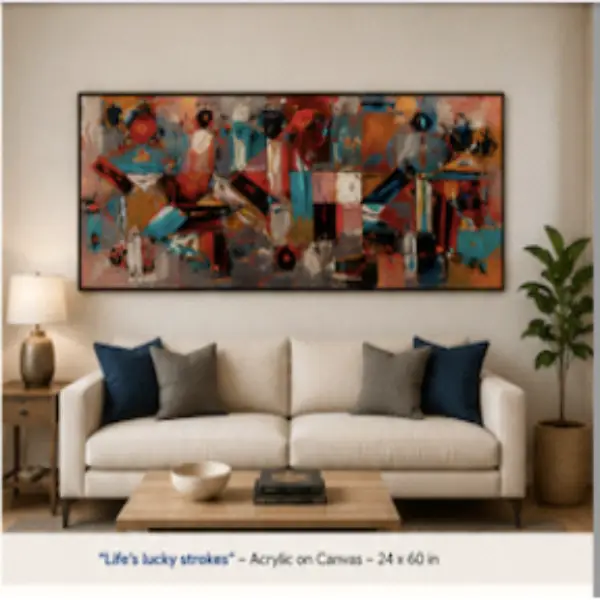
The scale of a painting should relate to the space around it. A small painting on a large empty wall may lose its presence, while an oversized work in a compact room may feel overwhelming.
For a painting displayed above a sofa or other substantial piece of furniture, a useful starting point is to choose artwork that occupies roughly two-thirds to three-fourths of the width of the furniture beneath it.
Of course, these are guidelines—not rules. Sometimes an unexpected scale can create a powerful visual effect.
4. Let the Painting Have Space to Breathe
A painting does not always need to fill a wall. Empty space around an artwork can be just as important as the painting itself. It allows the eye to rest and gives the work greater visual presence.
If you have found an original painting that speaks to you, resist the temptation to surround it with too many decorative objects. Sometimes, less allows the art to say more.
5. Use Light Thoughtfully
Good lighting can bring a painting to life. Natural daylight can reveal subtle variations in colour, although paintings should not be exposed to prolonged harsh sunlight. In the evening, focused lighting can help create a warm and inviting presence.
A well-placed picture light or adjustable spotlight can highlight the artwork without overpowering the rest of the room.
This is particularly important for works with layered colour and texture, where changes in light can reveal different aspects of the painting.
6. Think About Colour—But Don't Try to Match Everything
A painting does not need to match the colour of your cushions, curtains or carpet. Sometimes an artwork that contrasts with its surroundings creates the most interesting result.
Instead of asking, "Does this painting match my room?", try asking:
"What feeling does this painting bring into the room?"
A bold painting may add energy to a quiet interior. A work dominated by softer tones may bring calm to a more active space. An acrylic on canvas painting, for example, can become the visual element that brings seemingly different parts of a room together.
7. A Single Painting Can Be More Powerful Than Many
There is no need to fill every wall. One carefully chosen painting can become the emotional centre of a room. It can create a place where the eye naturally pauses.
Large paintings work particularly well in spaces where you want to make a strong visual statement. Smaller works can create equally meaningful moments in hallways, reading corners and intimate spaces.
The key is to allow each painting to have its own relationship with the room.
8. Create a Gallery Wall with a Sense of Rhythm
If you have several paintings, a gallery wall can be a wonderful way to create a visual story. You can arrange works according to:
- colour
- subject or theme
- size
- a common series
- or simply the emotional connection between them
Maintain reasonably consistent spacing between the works so that the arrangement feels intentional. A gallery wall does not have to be symmetrical. Sometimes a more organic arrangement creates greater character—as long as the overall composition feels balanced.
9. Choose a Painting You Can Live With
Perhaps the most important consideration is your own response to the artwork. Trends change. Interiors change. But a painting that continues to make you pause, think or feel something can remain meaningful for years.
This is particularly true when choosing original art. The painting becomes more than an object placed on a wall; over time, it becomes part of the life and memories of the home.
For collectors looking for an abstract painting India has a rich and diverse community of artists and visual traditions to explore. But wherever the painting comes from, the most important thing is the personal connection you feel with it.
A Final Thought
There is no single perfect way to display art. Guidelines about height, scale and lighting are useful, but ultimately your home should reflect the way you live. Move a painting if it doesn't feel right. Try it in another room. Look at it at different times of the day.
Sometimes the perfect place for a painting is not immediately obvious.
Art has the power to transform a house into a more personal home. Give each painting the space, light and attention it deserves—and allow it to become part of your everyday life.
Choosing between a classic landscape painting and a modern abstract artwork isn't always easy. If you're unsure which style would work best for your space, contact us. We'll be happy to share our suggestions and help you find a piece that feels right for you.